Choosing the right Steel Platforms in China requires more than comparing prices on a supplier website. Global buyers need dependable engineering, consistent fabrication, and clear export communication. A platform may look strong in photographs, yet its real performance depends on steel grade, weld quality, surface treatment, and load calculations.
Small details matter.
This guide examines practical factors for evaluating Chinese steel platform manufacturers. It considers production experience, engineering capability, quality-control procedures, and evidence of completed projects. Buyers should review material certificates, welding qualifications, dimensional inspection reports, and corrosion-protection methods. Hot-dip galvanizing, for example, can be important for outdoor platforms exposed to rain, salt, or industrial moisture.
Factory visits and independent inspections can reveal more than catalog descriptions. Look for organized cutting areas, calibrated measuring tools, traceable steel labels, and protected finished goods. Reliable suppliers should also explain packaging, container loading, delivery schedules, and after-sales support without avoiding difficult questions.
International standards may guide the project, but requirements can differ by destination and application. Local engineers should confirm structural calculations, safety factors, access features, and installation conditions. A supplier’s certificate is useful evidence, not automatic proof of suitability.
No supplier is perfect.
Even experienced manufacturers may face delays, drawing revisions, or communication gaps. The strongest partners acknowledge these risks and provide corrective actions. This overview helps global buyers compare China-based options with clearer expectations, stronger documentation, and a more practical understanding of value. The lowest quotation may not remain the lowest cost after installation, maintenance, and replacement risks are considered. Reliability is built through verifiable processes, not confident promises.
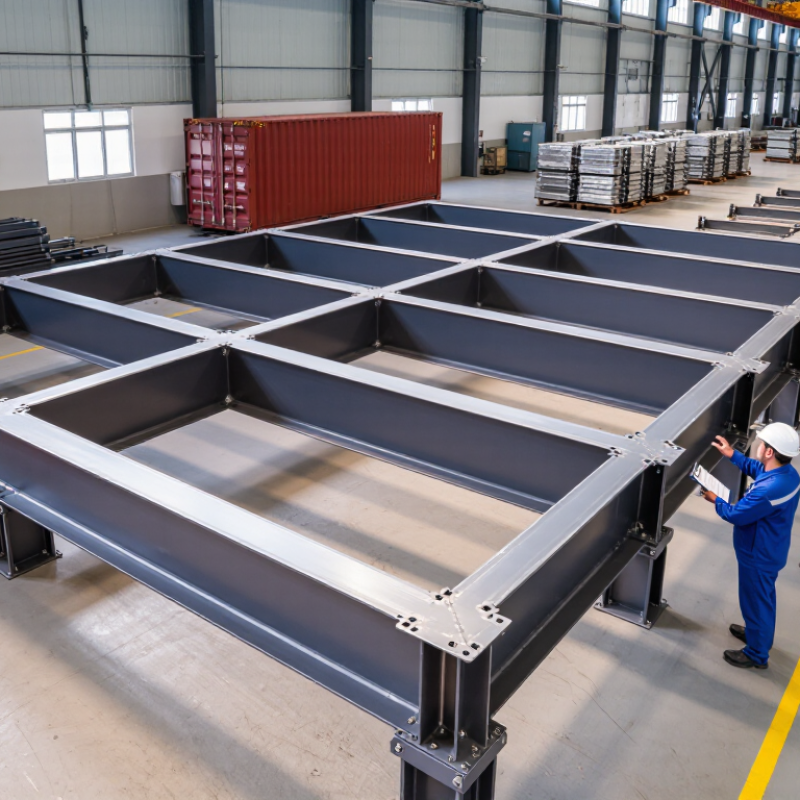
China’s steel platform industry rests on exceptional production scale. The National Bureau of Statistics reported about 1.02 billion tonnes of crude steel in 2023. World Steel Association data placed China at roughly 1,019 million tonnes, or more than half of global output. That volume supports broad product availability, from hot-rolled coils to structural sections.
For global buyers, scale matters, but verification matters more. China’s General Administration of Customs recorded approximately 90.3 million tonnes of steel exports in 2023. This shows strong international shipping capacity. However, export volume does not prove consistent quality. Buyers should review mill certificates, chemical analysis, mechanical test results, and batch numbers. Independent pre-shipment inspection can reveal surface defects, incorrect dimensions, or incomplete documentation.
Digital platforms can shorten supplier searches and improve quotation comparisons. Experienced procurement teams still examine production capacity, port distance, packaging methods, and delivery records. The World Steel Association notes continuing pressure on steel demand and global market conditions. Prices may shift quickly. No platform is flawless. A low quotation may hide weaker tolerances, delayed delivery, or unclear responsibility after shipment. Buyers should compare at least three technically equivalent offers and keep every specification in writing. Small details matter. A two-millimetre tolerance difference can affect fabrication costs. Reliable sourcing depends on evidence, not impressive listings.
| Data Category | Industry Indicator | 2023 Reference Data | Relevance for Global Buyers | Recommended Platform Data Field |
|---|---|---|---|---|
| Market Scale | Crude steel production | 1,019.1 million tonnes | Shows the scale of China’s upstream steelmaking capacity and the depth of its domestic supply base. | Annual production capacity; product availability; mill location |
| Global Position | Share of world crude steel output | Approximately 54% | China remained the world’s largest crude steel-producing country in 2023, providing extensive sourcing options. | Country of origin; production region; export eligibility |
| Raw Material Chain | Pig iron production | 871.0 million tonnes | Provides a reference for the scale of China’s integrated ironmaking and steelmaking supply chain. | Ironmaking route; integrated mill status; raw-material traceability |
| Finished Products | Finished steel production | Approximately 1,362.3 million tonnes | Indicates the breadth of finished steel supply across flat, long, coated and specialty product categories. | Steel grade; dimensions; surface treatment; production standard |
| Export Flow | Steel product exports | 90.26 million tonnes | Confirms the importance of export-oriented sourcing and international order fulfillment. | Export history; destination markets; shipment volume; lead time |
| Import Flow | Steel product imports | 7.65 million tonnes | Helps buyers understand the relative scale of China’s domestic steel market and imported product demand. | Import requirements; applicable customs classification; buyer market |
| Platform Type | Manufacturer-direct marketplace | Direct quotation and contract negotiation | Suitable for large-volume orders that require mill documentation, technical confirmation and production scheduling. | Mill certificate; minimum order quantity; production schedule; payment terms |
| Platform Type | Multi-supplier sourcing platform | Multiple quotations for one specification | Useful for comparing price, grade, delivery period and available stock across different supply channels. | Supplier verification; quotation validity; stock status; comparison tools |
| Platform Type | Stock and warehouse marketplace | Ready inventory with warehouse allocation | Best suited to buyers requiring shorter delivery times or smaller and mixed-size orders. | Warehouse location; actual weight; inspection status; dispatch time |
| Compliance | Export documentation package | Commercial invoice, packing list, bill of lading and certificate of origin | Supports customs clearance, documentary review and country-specific import procedures. | Document checklist; issuing authority; digital document access |
| Quality Control | Product conformity evidence | Mill test certificate and inspection records | Allows buyers to verify chemical composition, mechanical properties, dimensions and applicable standards. | Heat number; test results; inspection body; certificate language |
| Logistics | International shipment planning | Container, breakbulk and bulk-shipment options | Enables selection of a transport method based on cargo size, destination, urgency and total landed cost. | Loading port; destination port; Incoterms; estimated transit time |
| Commercial Terms | Common international trade terms | FOB, CFR and CIF quotations | Improves comparison of supplier offers by separating product price, freight and insurance responsibilities. | Currency; Incoterm version; freight validity; insurance coverage |
| Risk Control | Supplier due diligence | Business registration, export authorization and transaction history | Reduces counterparty, documentation and fulfillment risks before an international purchase is placed. | Legal entity verification; export capability; references; dispute records |
| Source note: Production figures are based on 2023 national and international steel-industry statistics. Export and import figures refer to China’s steel products trade in 2023. Platform types and buyer data fields are presented as practical, brand-neutral sourcing criteria for international procurement. | ||||
China produced about 1.02 billion tonnes of crude steel in 2023. This supports broad product availability and large production capacity.
Request mill certificates, chemical analysis, mechanical test results, batch numbers, and production records. Listings alone are not enough.
Compare at least three technically equivalent offers. Check dimensions, tolerances, coating, packaging, delivery, and installation guidance.
A mezzanine can create working space above a warehouse floor. It needs verified load calculations, stable beams, decking, handrails, and toe boards.
Walkways need stable surfaces and safe access. Serrated grating helps with water, oil, and dust.Stairs need consistent risers, comfortable treads, and secure handrails.
Modular decks suit projects that may expand or relocate. Bolted connections simplify changes, but they require regular inspection.
Use independent inspection when practical. Inspect steel thickness, welds, dimensions, surface treatment, and packing photographs.One sample is insufficient.
Review twelve months of shipment records, booking dates, port choices, and delay explanations. Export volume shows logistics strength, not guaranteed punctuality.
Confirm floor strength, access routes, installation space, humidity, local safety requirements, and maintenance access. A missed site constraint can create expensive changes.
China’s steel platform industry has developed alongside the country’s large-scale steel production, reaching approximately 1.02 billion tonnes of crude steel in 2023. For global buyers, Steel Platforms are available in various forms, including mezzanines, industrial walkways, access stairs, and modular deck systems. Each type can be tailored to site dimensions, operating conditions, personnel movement, and storage requirements. Buyers should review technical benchmarks such as EN 1090, ISO 9001, ASTM A36, and clearly documented load ratings to support safe and consistent project outcomes.
Supplier evaluation should cover manufacturing capacity, welding and dimensional control, material traceability, inspection procedures, production lead times, and relevant export experience. International purchasing also requires attention to surface coatings, corrosion protection, pre-shipment inspections, packaging, Incoterms, and compliance documents. By comparing suppliers through both engineering evidence and commercial reliability, buyers can select steel platform solutions that meet project specifications, shipment requirements, and long-term performance expectations.

 Runda Racking