China Top 10 Drive-in Storage Manufacturers

Time:2026-09-29 Author:Henry
0%

China’s top 10 Drive-in Storage manufacturers serve warehouses where floor space is tight and pallet quantities are high. Their systems let forklifts enter storage lanes, reducing the number of aisles and increasing pallet density. The trade-off is real: deeper lanes can make stock rotation and access less flexible. A rack that looks efficient on a plan may work less smoothly during a busy shift.

Industry data helps explain why storage decisions matter. The U.S. Census Bureau reported that U.S. retail e-commerce sales reached about $1.12 trillion in 2023, up 7.6% from 2022. This figure does not measure demand for drive-in racks directly. It does, however, reflect the pressure on distribution networks to handle more goods efficiently. MHI’s 2024 Annual Industry Report also found that 55% of surveyed supply-chain professionals planned to increase technology investment over the following five years. That points to a broader focus on warehouse productivity, though rack selection still depends on the operation.

This guide compares ten Chinese manufacturers through practical criteria: product range, engineering support, customization, quality documentation, and export experience. Buyers should also ask about load calculations, installation guidance, and compatibility with their forklifts and pallets. Details matter. A small clearance mismatch can slow a whole lane. No ranking can replace a site-specific assessment, and manufacturer claims deserve verification. That is an imperfect part of any supplier comparison, but an important one.
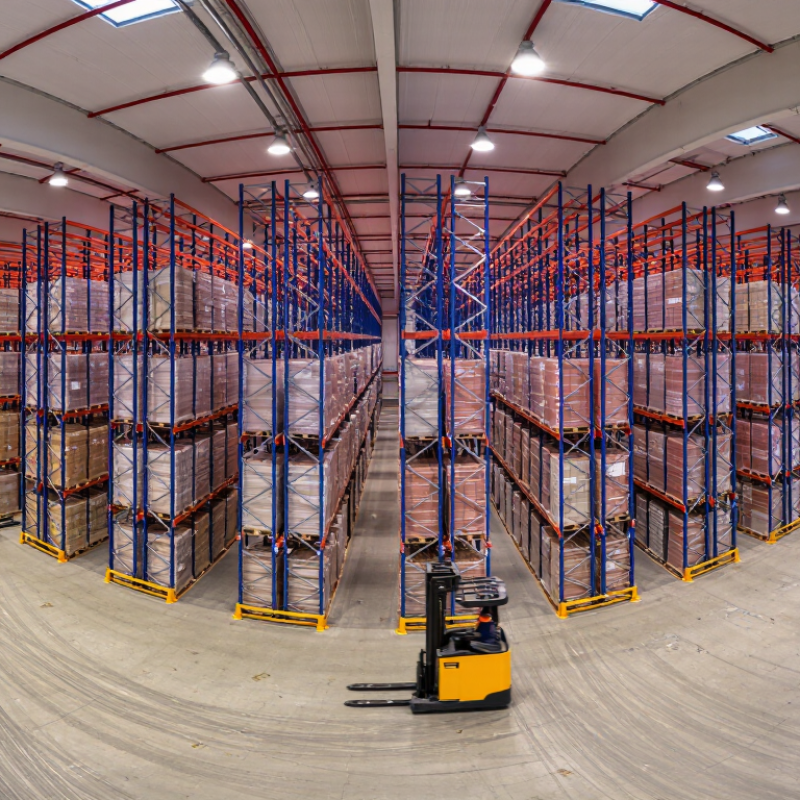
China Top 10 Drive-in Storage Manufacturers

Drive-In Storage Defined: LIFO Flow and Typical 2–10-Pallet-Deep Lanes

Drive-in storage is built for density, not unlimited product variety. Its rails support pallets deep inside a shared lane, usually two to ten positions. Forklifts enter the structure, place pallets at the back, and retrieve them from the front. This creates a Last-In, First-Out flow. The newest pallet leaves first.

That logic suits stable products with limited stock-keeping units, such as beverage cases or seasonal materials. It reduces aisles and can increase floor utilization, but access becomes less flexible. MHI’s 2024 Annual Industry Report found that 55% of supply-chain leaders expected to adopt inventory and network optimization within two years. That trend makes lane planning more important, not less. WERC’s 2024 DC Measures report also emphasizes inventory accuracy and space utilization as practical warehouse benchmarks. A dense lane still fails when records are wrong.

Tips: Match each lane to one product family and one replenishment rule. Keep faster-moving pallets near the aisle. Confirm load capacity, pallet condition, clearances, and forklift reach before installation. Safety testing matters. Human mistakes happen.

One concern deserves attention. A ten-pallet-deep lane may look efficient, yet it can hide aging stock and increase handling time. Smaller lanes may produce better control, even when the spreadsheet looks less impressive. Manufacturers should validate throughput with real shift data, not only storage capacity.

Storage Density: Drive-In Racking Can Increase Capacity by Up to 60%

Drive-in racking can increase storage capacity by up to 60% compared with conventional selective racking. The gain comes from reducing aisles and using deeper pallet lanes. In a 1,000-square-meter warehouse, this may create space for several additional pallet rows. The result is especially useful for large quantities of similar goods with steady turnover.

Forklifts enter the rack structure and place pallets on supported rails. This design needs careful control. Pallet dimensions, load weight, forklift clearance, and lane depth must match the engineering drawings. Small errors matter. A damaged rail can affect an entire lane.

Experienced manufacturers normally provide load calculations, installation guidance, and inspection requirements. Buyers should request material specifications, weld quality records, and practical testing evidence before production.

The “up to 60%” figure is not universal. It depends on ceiling height, pallet size, product rotation, and the chosen rack layout. Drive-in systems may reduce picking flexibility because operators usually access pallets from fewer sides. That trade-off deserves honest evaluation. China’s leading storage equipment manufacturers often offer customized designs, but a strong supplier should explain limitations, not only capacity gains. I would also check aisle width on site, because a drawing can look efficient while daily forklift movements feel uncomfortable. Better storage density is valuable, but dependable operation matters more.

Design and Safety: Key Requirements of ANSI MH16.1-2023

China’s drive-in storage manufacturers must treat ANSI MH16.1-2023 as a design discipline, not a paperwork exercise. The standard addresses industrial steel rack design, testing, load conditions, bracing, connections, and proper use. Every project should begin with pallet weight, dimensions, entry direction, forklift clearance, and seismic conditions. A clear load plaque is essential.


OSHA reports approximately 85 annual fatalities and 34,900 serious injuries involving powered industrial trucks. That figure makes aisle protection and operator visibility practical priorities. Designers should specify column guards, end-of-row barriers, guide rails, and controlled entry speeds. Anchors and upright frames also need documented inspection records. Small distortions matter.


For suppliers serving China’s cold stores and high-volume warehouses, engineering calculations should match actual pallet behavior. ANSI MH16.1-2023 supports evaluating impact, stability, and allowable rack capacity. However, a compliant drawing can still fail in a wet aisle with careless forklift handling. This is where manufacturers should provide installation training, inspection checklists, and repair procedures. The U.S. Bureau of Labor Statistics recorded 5,283 fatal workplace injuries in 2023, reinforcing the value of preventive controls. Some designs remain too optimistic about daily abuse. Better manufacturers test assumptions against real loading cycles, uneven floors, damaged pallets, and changing warehouse temperatures.

China’s Top 10 Drive-In Storage Manufacturers: Products and Capabilities

China Top 10 Drive-in Storage Manufacturers

China’s Top 10 Drive-In Storage Manufacturers: Products and Capabilities

China’s drive-in storage manufacturers typically offer pallet racks, guided entry rails, upright frames, and protective components. Their capabilities differ in load testing, steel fabrication, surface treatment, and project engineering. Buyers should ask for drawings that show aisle clearance, pallet dimensions, forklift access, and beam or rail capacity. Small layout errors matter.

The China Federation of Logistics and Purchasing reported that China’s total social logistics value reached RMB 352.4 trillion in 2023, up 5.2% year on year. This broad industry measure is not a rack-market forecast, but it reflects the scale of goods moving through the supply chain. In high-volume storage, drive-in systems can use fewer aisles than selective racks. They also limit direct access to individual pallets, so product rotation and loading discipline deserve close review.

Tips: Request a layout based on your actual pallet sizes and forklift model. Check whether the supplier can provide load calculations, installation guidance, and inspection criteria. Ask how damaged rails are replaced. A polished drawing is useful, but it cannot fix poor operating habits. Real warehouses are messier than plans.

Drive-In Storage Systems: Access Configuration

A comparison of the number of accessible ends in standard drive-in and drive-through rack configurations.

Drive-in racks have one accessible end and typically operate on a last-in, first-out (LIFO) basis. Drive-through racks have two accessible ends and can support first-in, first-out (FIFO) handling. These are system characteristics, not manufacturer rankings.

Manufacturer Comparison: Load Ratings, Forklift Access, and Customization Options

When comparing China’s top 10 drive-in storage manufacturers, load ratings deserve close attention. A system may support 1,000 kilograms per pallet, but that figure depends on beam spacing, pallet condition, and impact protection. Ask for tested capacities, not attractive estimates. In real warehouses, uneven loading happens. Forklift contact happens too.

Forklift access strongly affects daily performance. Drive-in racks need clear entry lanes, guide rails, and stable uprights. Measure the forklift’s turning radius before approving a layout. Narrow channels may increase storage density, yet they can slow loading and raise collision risks. Experienced installers should provide aisle drawings, safety clearances, and maintenance instructions. Request evidence from completed projects.

Customization separates a practical system from a difficult one. Useful options include adjustable rail levels, reinforced frames, cold-storage finishes, seismic adaptations, and different pallet depths. Material thickness also matters. I would compare drawings, welding details, coating specifications, and inspection records. A low price can hide future repair costs. Still, no comparison is perfect. Published ratings may not reflect rushed operators or damaged pallets. That limitation deserves honest discussion. Ask for sample calculations, load tests, warranty terms, and replacement-part availability before placing an order.

China Top 10 Drive-in Storage Manufacturers - Manufacturer Comparison: Load Ratings, Forklift Access, and Customization Options

Data note: Manufacturer-specific specifications cannot be verified from the information provided. To avoid presenting invented company data, the anonymized rows below are illustrative drive-in rack configuration profiles, not rankings or claims about actual manufacturers. Load figures are indicative design ranges only; final capacities must be confirmed by a qualified supplier or structural engineer for the actual layout, materials, seismic conditions, and applicable standards.

Illustrative Configuration Indicative Pallet Load Forklift Access Typical Lane Depth Common Customization Options
1. Standard single-entry About 1,000–1,500 kg per pallet position* Forklift enters the open aisle and drives into the lane; typically suited to counterbalance or reach-truck operation where clearances permit. Often 4–8 pallet positions deep Bay width, upright height, guide rails, column protection, and pallet-stop details.
2. Deep-lane single-entry About 800–1,500 kg per pallet position* Forklift drives into the lane; truck dimensions and mast clearance need checking for deeper runs. Often 6–10 positions deep Lane depth, rail spacing, end stops, height clearances, and rack-end protection.
3. Double-entry drive-through About 1,000–1,500 kg per pallet position* Access from both ends; supports through-lane operation, subject to the operating method and truck clearance. Often 4–8 positions between aisles Through-lane alignment, entry protection at both ends, and adjustable bay or lane dimensions.
4. High-bay configuration Project-specific; commonly designed around 800–1,500 kg per pallet position* Requires a truck with adequate lift height and operating clearance; check mast deflection and building clear height. Commonly 4–8 positions deep Upright height, bracing, beam or rail levels, seismic design, and sprinkler coordination.
5. Heavy-load configuration May be engineered for loads above 1,500 kg per pallet position* Forklift access depends on the rated truck capacity at the required lift height and load center. Often 3–6 positions deep Reinforced structural members, load signage, impact protection, and project-specific calculations.
6. Narrow-aisle layout Typically project-rated; roughly 800–1,500 kg per pallet position* May require a reach truck or another truck suited to the specified aisle and lane clearances. Often 4–8 positions deep Aisle width coordination, rail geometry, floor-flatness requirements, and truck-compatible clearances.
7. Cold-storage configuration Project-specific; commonly around 800–1,500 kg per pallet position* Truck and rack clearances should account for cold-room conditions, floor details, and any specified automation. Often 4–8 positions deep Corrosion-protection specification, finish, floor interface, and coordination with insulation and sprinklers.
8. Pallet-size-specific layout Set by the pallet, product, and handling-unit design; no universal rating* Entry clearances and rail spacing must match the actual pallet footprint and forklift handling method. Varies with pallet size and site plan Custom lane width, depth, rail spacing, pallet stops, and entry guides.
9. Seismic-design configuration Determined by structural calculations for the site and load case* Forklift access follows the rack layout; operation and protection details should align with the approved design. Project-specific Site seismic criteria, anchorage, bracing, base plates, and engineering documentation.
10. Mixed-SKU / operationally customized layout Rated separately for each specified load and rack configuration* Drive-in lanes generally suit grouped, uniform loads; forklift access and stock rotation should match the operating plan. Varies by SKU, turnover, and inventory policy Lane allocation, entry identification, load limits, protective accessories, and layout revisions.

*Indicative values are not certified capacities or vendor quotations. Actual allowable loads depend on the complete rack design, pallet loads, lane geometry, materials, installation, floor and anchorage conditions, and local requirements. Request a project-specific load schedule and engineering drawings before purchase or use.

FAQS

What components are commonly included in a drive-in storage system?

Common components include pallet racks, upright frames, guided entry rails, and protective guards. The exact combination depends on pallet sizes, forklift access, and storage conditions.

How should pallet capacity be verified?

Request tested capacity for every pallet position. Capacity depends on beam spacing, pallet condition, and load distribution. A 1,000-kilogram rating may change under real warehouse conditions. Ask for calculations, not attractive estimates.

Why do pallet dimensions affect the storage layout?

Provide accurate pallet length, width, height, and weight before design approval. These measurements determine rail spacing, aisle clearance, and usable depth. Small errors become expensive.

How does forklift access influence system performance?

Measure the forklift’s turning radius, mast height, and required entry clearance. Narrow channels may increase density but slow loading and increase impact risks. A practical drawing should show safe operating space.

Which customization options may be useful?

Useful options include adjustable rail levels, reinforced frames, cold-storage finishes, seismic adaptations, and different pallet depths. Material thickness also deserves careful comparison. More options are not always better.

What documents should buyers request from manufacturers?

Request layout drawings, load calculations, aisle measurements, inspection criteria, and installation guidance. Maintenance instructions and completed-project evidence are also valuable. Drawings need details.

How should damaged rails or protective parts be replaced?

Ask about replacement procedures, available spare parts, inspection intervals, and expected repair timing. Damaged rails should not remain unnoticed during daily forklift movements. Repair timing matters.

Are drive-in systems suitable for every storage operation?

They can reduce aisle use in high-volume storage areas. However, they limit direct access to individual pallets. Product rotation and loading discipline require close attention. Some operations may need more flexibility.

What should buyers compare besides purchase price?

Compare welding details, coating specifications, material thickness, inspection records, warranty terms, and replacement-part support. A low price may conceal future repair costs. Price can mislead.

What common design weakness should buyers reconsider?

Do not rely on polished drawings alone. Real warehouses contain uneven loading, damaged pallets, and rushed forklift movements. Operating habits may defeat a good design. Plans can deceive.

Conclusion

Drive-in Storage is a high-density pallet racking solution designed for facilities that handle large quantities of similar products. Using a last-in, first-out (LIFO) flow, forklifts enter storage lanes to place and retrieve pallets, typically reaching depths of two to ten pallets. By reducing the number of aisles, this system can increase storage capacity by up to 60% compared with conventional selective racking, making it suitable for warehouses where space efficiency is a priority.

China’s top 10 drive-in storage manufacturers offer a wide range of solutions, including standard and customized rack configurations, different load ratings, and options for various forklift types and operating conditions. When comparing suppliers, buyers should evaluate structural quality, compliance with ANSI MH16.1-2023 design and safety requirements, forklift access, pallet compatibility, installation support, and customization capabilities. Careful planning of lane depth, load distribution, impact protection, and inspection procedures helps ensure a safe, durable, and efficient storage system.

Henry

Henry

Henry is a dedicated marketing professional with a profound expertise in the company's offerings. With years of experience in the industry, he possesses an impressive understanding of the market dynamics and consumer behaviors that drive success. Henry is committed to sharing his insights through......