How to Choose the Best Impact Racks in 2026

Time:2026-11-18 Author:Liam
0%

Choosing Impact Racks in 2026 is not simply a matter of buying the thickest steel guards. The right protection depends on rack design, forklift traffic, load profiles, and the consequences of a collision. A guard that blocks one aisle may narrow another too much. Small details matter.

MHI’s 2024 Annual Industry Report surveyed more than 1,700 supply-chain professionals. It found that 55% planned to increase technology investment. That finding is not rack-specific, but it reflects a wider push toward more efficient, data-informed operations. OSHA’s materials-handling rule, 29 CFR 1910.176(b), also requires stored materials to remain stable and secure. These sources offer useful context; neither replaces a site assessment.

This guide explains how to compare impact ratings, mounting methods, materials, and replacement costs. Check the guard’s stated capacity against realistic vehicle speeds and likely contact points. Measure aisle clearance with forklifts turning, not merely parked. Confirm that anchors suit the concrete slab and that damaged components can be replaced. Then review inspection routines with the people who work near the racks every day. Their observations can reveal repeated scrapes or blind corners that plans miss. That part is easy to overlook. No product eliminates every collision, and published ratings may not reflect your exact layout. Treat them as evidence, not guarantees. The best choice balances credible specifications, practical installation, and ongoing inspection—not the lowest quote alone.
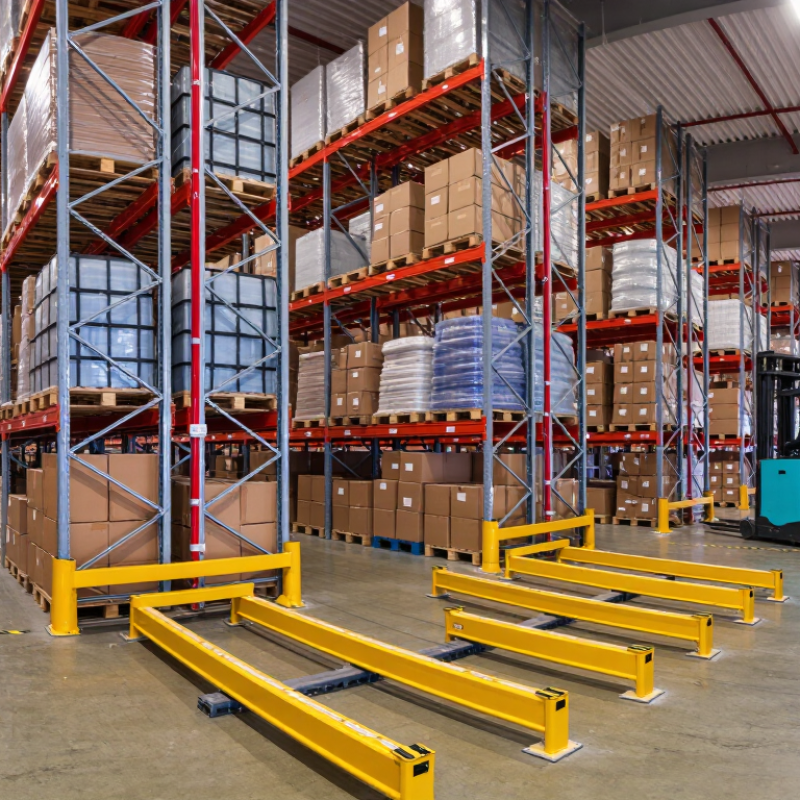
How to Choose the Best Impact Racks in 2026

Identify Rack Duty by Pallet Loads, Forklift Traffic, and Impact Exposure

Choose impact-rack duty from the conditions in each aisle, not from a generic warehouse average. Record the heaviest loaded pallet, its dimensions, and how its weight sits across the beams. Loads may shift. Compare these measurements with the rack’s posted capacity and approved layout. Capacity depends on beam spacing, frame height, and anchoring, so verify the configuration with qualified rack professionals.

Observe forklift traffic during a busy shift. Count turns, reverse moves, narrow approaches, and repeated contact near aisle ends. One occasional brush differs from daily pallet strikes against the same upright. Look for scuffed paint, bent guards, loose anchors, or damaged uprights. These are warning signs, not a way to calculate capacity. Guards can reduce exposure, but they do not make damaged rack safe.

Match protection and inspection frequency to the risk. Heavier loads, faster traffic, and tighter clearances require closer attention. Check inspection and repair procedures before selecting a duty level. Do not guess. A neat spreadsheet may still miss a forklift’s blind-side turn. Walk the aisle with operators, then verify the selection against rack documentation and a qualified design review.

How to Choose the Best Impact Racks in 2026

Compare pallet load, forklift traffic, and recorded impact exposure when screening rack duty.

Illustrative planning profiles—not industry averages, rack-capacity ratings, or safety thresholds. Bars show each input as a percentage of the chart’s displayed range; compare profiles within each factor, not between factors. Confirm actual unit loads, count forklift passes and contact events at the site, and have rack capacity and protection reviewed by a qualified rack professional.

Measure Bay Dimensions, Load Mass, Aisles, and Forklift Turning Clearance

Before choosing impact racks, measure each bay from upright face to upright face, then check the usable beam length. Include pallet width, depth, and any load overhang; a wrapped pallet can still project beyond its base. Measure the tallest stored load, too. Small details matter.

Weigh the full palletized load, including packaging, and record the heaviest expected load at each beam level. Compare those figures with the rack’s rated capacity for the exact configuration. Uneven or shifting loads deserve extra attention. I would recheck them, even if the first estimate looks reasonable.

Measure aisle width with the forklift and its largest typical load in mind. Turning clearance depends on the truck, pallet length, and approach angle, not aisle width alone. Check the equipment’s turning data, then mark the proposed rack line on the floor and test a full turn. Leave room. Also account for guards, columns, doorways, and pedestrian paths. A sketch may look generous; a loaded forklift can reveal a tight corner quickly. Keep the measured figures and rack layout together for a qualified supplier to verify before installation.

How to Choose the Best Impact Racks in 2026 - Measure Bay Dimensions, Load Mass, Aisles, and Forklift Turning Clearance
Planning scenario Indicative bay dimensions Typical unit-load mass Load calculation to verify Indicative aisle and truck clearance Impact-protection and fit checks
Counterbalance forklift; standard pallets Approx. 96–108 in beam length; 42–48 in frame depth. Confirm pallet size, load overhang, and required flue spaces. About 1,000–2,000 lb per pallet (450–900 kg). For 2 pallets per level and 4 loaded levels at 2,000 lb each: 16,000 lb total stored product per bay. Check beam-pair and upright-frame capacities for the actual configuration. A preliminary planning range is about 12–13 ft aisle width. Check the specific truck’s right-angle stacking aisle (AST) data, turning path, load dimensions, and operating clearance. Protect exposed aisle-end uprights and corners with appropriately rated guards or barriers. Keep protection outside the required travel and turning envelope.
Reach truck; selective pallet storage Approx. 96–108 in beam length; commonly 42–48 in frame depth, subject to pallet and load geometry. About 1,000–2,500 lb per pallet (450–1,130 kg). Multiply the heaviest planned unit load by the number of pallet positions per level and loaded levels. Include any concentrated or uneven load conditions in the rack design review. A preliminary planning range is about 9–10 ft aisle width. Use the selected truck’s published AST and turning data; mast, load, and operating conditions affect clearance. Consider upright guards at high-contact locations. Confirm that guards, rack anchors, and barriers do not reduce the manufacturer-specified aisle or obstruct truck maneuvering.
Narrow-aisle turret or articulated truck Set beam length, frame depth, and rack height to the truck, pallet, and load dimensions; do not assume standard clearances will fit. Often around 1,000–2,500 lb per pallet (450–1,130 kg); confirm capacity at the required lift height. Check the truck’s residual capacity at lift height and load center, as well as the rack’s beam, frame, and overall bay capacity. A preliminary range for some narrow-aisle layouts is about 5.5–6.5 ft, but equipment type and guidance system matter. Validate with the exact truck’s specification and a layout review. Maintain the designed aisle and guidance clearances. Locate impact barriers at aisle ends and cross-aisles only after checking turning paths and emergency access.
High-mass or irregular loads Measure the complete load, including pallet, packaging, and protrusions. Select beam length and frame depth to support the load without unsafe overhang. Use the actual maximum loaded-unit mass; loads above 2,500 lb (1,130 kg) require specific equipment and rack-capacity checks. Record maximum mass per position and per beam level. Account for load placement, eccentricity, impact risk, and the number of loaded levels. Base aisle width on the loaded truck’s published AST and turning envelope, then allow for the site’s operating conditions and required clearances. Use a qualified rack designer to assess the rack, anchors, floor, and impact-protection system for the actual load and site conditions.

Planning note: Dimensions and aisle ranges above are indicative examples, not rack ratings or guaranteed minimum clearances. Verify the exact forklift manufacturer’s specifications, pallet and load measurements, rack engineering, floor capacity, local requirements, and site layout before installation. Rack capacity depends on beam span, frame configuration, load distribution, and other design conditions.

Verify Rated Capacity Against ANSI MH16.1-2021 and Posted Load Limits

Choosing impact racks in 2026 means checking more than the label on a beam. ANSI MH16.1-2021 covers the design, testing, and use of industrial steel storage racks. Ask for documentation showing the rack’s rated capacity for its actual configuration. Upright height, beam spacing, bracing, and anchorage can all affect what the structure safely supports. Similar-looking racks may have different limits.

Compare that documentation with the posted load limits at the rack. Check that signs identify the permitted load per beam level or bay, as applicable, and match the installed layout. Then compare those limits with the heaviest pallet loads, including packaging. A pallet may look ordinary and still exceed a beam rating. Keep loads evenly distributed and centered; avoid placing a heavy pallet at one end. Small details matter.

Walk the aisle, too. Look for missing signs, bent uprights, loose anchors, or changes made after installation. If the layout or load pattern has changed, do not assume the old rating still applies. Get the configuration reviewed by a qualified rack professional. Real warehouses are messy, and paperwork can lag behind reality. That is worth admitting—and correcting before loading.

Compare Guards by Tested Impact Energy (J), Deflection (mm), and Anchors

How to Choose the Best Impact Racks in 2026

Compare guards using documented impact energy in joules, measured deflection in millimetres, and anchor details. A higher energy rating is not automatically better. Ask how the test was performed: impactor mass, speed, strike height, and mounting conditions all affect the result. Numbers need context. Check whether the tested guard matches the one you plan to install, including its length and fixings.

Tips: Request the full test report, not just a rating. Confirm the stated deflection leaves enough clearance from rack legs, stored loads, and aisles. Verify anchor type, embedment depth, and required concrete condition with the manufacturer’s installation data.

On site, inspect the floor and mark the guard’s position before drilling. A guard that bends less may transfer more force to its anchors or the floor, so review the complete test data rather than one headline figure.

If the substrate differs from the test setup, ask a qualified engineer or supplier to assess suitability. I would not assume a published result applies to every warehouse; real layouts and impact angles vary. Keep installation records, and recheck anchors and visible deformation after an impact.

Plan Rack Inspections Using RMI Guidance and OSHA 29 CFR 1910.176(b)

How to Choose the Best Impact Racks in 2026

Plan inspections around both RMI guidance and OSHA 29 CFR 1910.176(b). OSHA requires stored materials to remain stable and secure against sliding or collapse. The rule does not set a universal rack-inspection schedule. Build a practical schedule around traffic, load changes, and the consequences of a failure. Aisles with frequent forklift turns deserve closer attention.

Use RMI guidance to shape a consistent inspection process, and involve a qualified rack professional when damage or uncertainty arises. During routine checks, look for bent uprights, cracked welds, loose anchors, displaced beams, and missing capacity signs. Record the location, date, photos, and follow-up action. A bright paint mark can help flag a damaged frame, but it is not a repair. If a component looks compromised, keep loads and equipment away from the affected area while a competent person assesses it. Small dents can be easy to dismiss. That deserves a second look.

Tips: Inspect after impacts, not just on calendar dates. Keep clear records. Verify that stored pallets sit squarely and remain stable. Review near misses, too; they may reveal a blind corner or a rushed loading habit.

FAQS

How should I measure a rack bay before choosing impact guards?

Measure from upright face to upright face, then confirm usable beam length. Include pallet dimensions and any load overhang. A wrapped pallet can extend beyond its base.

What load details should I record?

Weigh the full palletized load, including packaging. Record the heaviest expected load at each beam level, then compare it with the rack’s rated capacity for that exact setup. I would recheck uneven or shifting loads.

How can I check whether an aisle has enough turning space?

Consider the forklift, its largest typical load, pallet length, and approach angle. Mark the proposed rack line on the floor and test a full turn with a loaded forklift. Leave room for columns, guards, doors, and pedestrians.

Which details matter when comparing impact guards?

Compare tested impact energy in joules, deflection in millimetres, and anchor details. Ask for the full test report, including impactor mass, speed, strike height, and mounting conditions. Numbers need context.

Does a higher impact-energy rating always mean better protection?

Not necessarily. Check whether the test setup matches the guard you plan to install. A guard that bends less may transfer more force to its anchors or the floor.

What should I check before installing a guard?

Inspect the floor and mark the guard position before drilling. Verify the anchor type, embedment depth, and concrete condition against the installation data. If the floor differs from the test setup, get a qualified assessment.

How often should rack inspections happen?

Set a practical schedule based on forklift traffic, load changes, and the impact of a possible failure. Inspect busy turning areas more closely. Check again after an impact, not only on calendar dates.

What warning signs should an inspection record include?

Look for bent uprights, cracked welds, loose anchors, displaced beams, and missing capacity signs. Record the location, date, photos, and follow-up action. A paint mark helps flag damage, but it is not a repair.

What should I do if a rack component looks damaged?

Keep loads and equipment away from the affected area until a competent person assesses it. Review near misses, too; they may reveal a blind corner or rushed loading habit. Small dents can be easy to dismiss.

Conclusion

Choosing the best Impact Racks in 2026 starts with understanding how the storage area will be used. Consider pallet weight and size, daily forklift traffic, and where collisions are most likely. Then measure bay dimensions, aisle widths, and forklift turning clearance so the layout supports safe, efficient movement without compromising storage capacity.

Before installation, compare the rack’s rated capacity with the intended loads and confirm that load limits are clearly posted, following applicable ANSI MH16.1-2021 guidance. Evaluate protective guards by their tested impact energy in joules, expected deflection in millimeters, and anchoring method—not appearance alone. Finally, establish a routine inspection plan informed by RMI guidance and OSHA 29 CFR 1910.176(b). Regular checks can help identify damage, loose anchors, or overloaded bays early, supporting safer and more dependable rack operations.

Liam

Liam

Liam is a dedicated marketing professional with a profound expertise in the industry, where he excels at highlighting the unique advantages of our core products. With a keen understanding of market trends and consumer needs, Liam frequently updates our company’s professional blog, providing......